San Francisco is awesome. It could be much better
March 12, 2026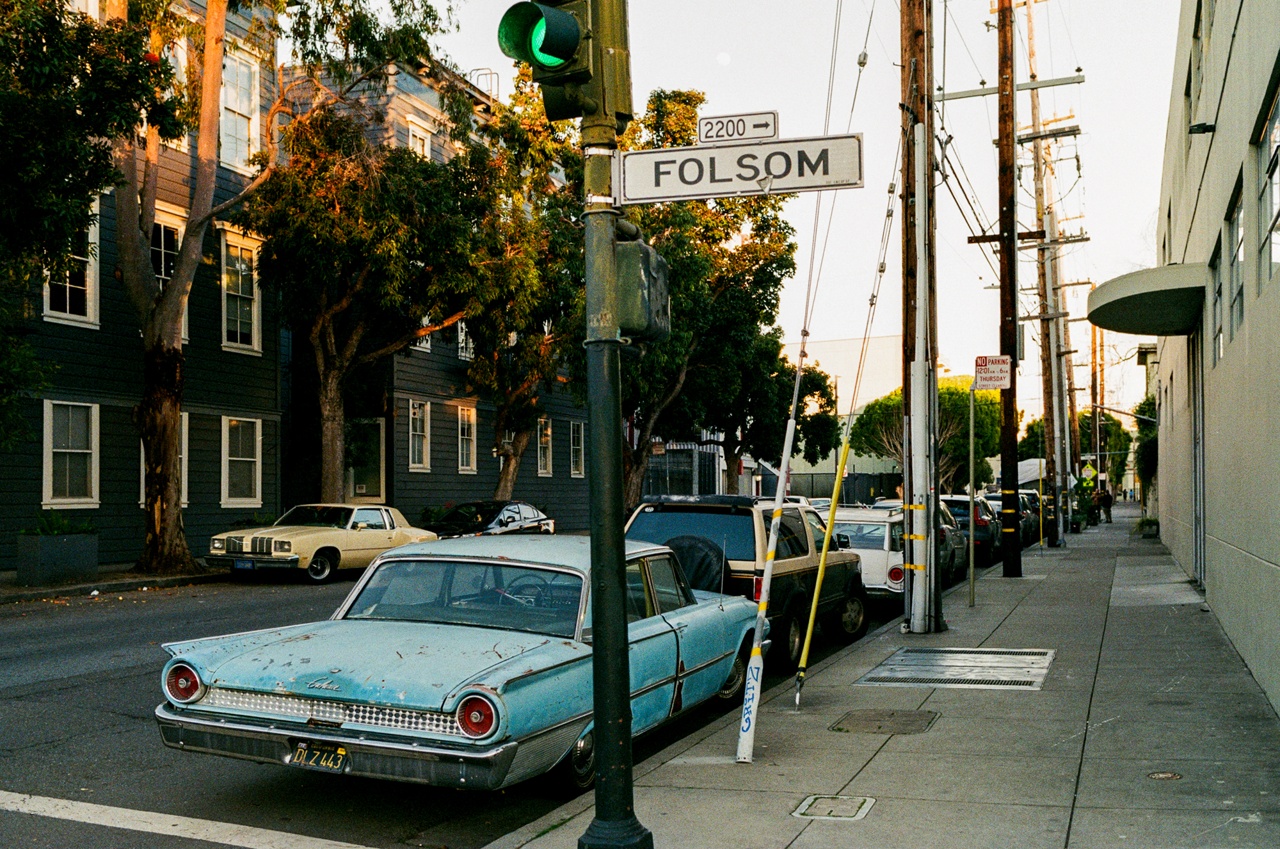
I’ve had the same conversation for years with both long-time San Franciscans and new arrivals. They know I care about local politics, so they innocently ask me about a random headline. Did you see the news about <insert topic>? Why is San Francisco so dysfunctional? I end up ranting: many of its problems are structural, beyond the city’s jurisdiction, but San Francisco is uniquely incompetent.
Most of the weirdness in California is explained by decades spent making it illegal, or financially irrational, to build housing where the jobs are1. San Francisco then doubled down with its own set of local restrictions. As Devon Zuegel points out, San Francisco’s obsession with process and public vetoes is a legacy of the urban renewal era, when top-down planning destroyed neighborhoods. Small vocal groups fought back, won, and codified the anti-bulldozer impulse into the city’s DNA. Those mechanisms now prevent the city from building the housing it needs, sandbagging progress. The city operates in a political economy that makes governance unusually hard.
California’s broad constraints and San Francisco’s thousand procedural chokepoints spill into everything else: homelessness, commuting, inequality, city budgets, etc. It’s all downstream. San Francisco’s problems are not monocausal, but housing scarcity makes almost every problem harder.
Nostalgic anti-growth
In 2021, Conor Friedersdorf wrote in The Atlantic one of the clearest explanations of how California drifted into its small-c conservative self: from “opportunity machine” to “closed club.” The state didn’t lose its dynamism, but instead regulated it out of existence through land-use restrictions. A coalition of homeowners drove this shift, often dressing up private comfort as public virtue. The “anti-growth Californian, mistaking nostalgia for justice,” limits development, drives up housing costs, and perpetuates the crisis.
Kim-Mai Cutler’s mid-2010s classic TechCrunch post is an earlier, more chaotic, culture-war-inflected version of the same idea. In Cutler’s view, the tech boom met a frozen housing supply, so everyone started fighting over crumbs and decrepit Victorians. Young vs old. Renters vs owners. Newcomers vs legacy residents. As money poured into the Bay Area, the incentives got more adversarial.
“Building causes gentrification” is emotionally intuitive, but still wrong
This debate is hard because people confuse “new buildings are expensive” with “new buildings cause prices to rise.” People might see a shiny building with high rents and infer it’s harmed neighborhood character. What they don’t see is the alternative where there’s no new building but those same new renters compete for older apartments nearby, pushing prices even higher. Despite the name, progressivism has become an ideology of stasis. It dislikes markets, distrusts supply, and tends to shun second order economic thinking. YIMBYism emerged from the left in the mid-2010s as a response to those views: culturally liberal, and broadly egalitarian, but willing to admit that shortages respond to supply.
Noah Smith has a good post that explains YIMBYism without leaning on the Econ 101 ideas that critics dismiss. His argument is that if you don’t add capacity, richer newcomers don’t disappear, nor do they stop coming. They displace other people by outbidding them for existing units. I’m one of them. One of the images in his post is a few blocks away from the 100-year old rent controlled apartment building I lived in for 7 years, while working as a well paid software engineer. My current place is also over a century old, and is even closer, so I understand the point personally. New supply doesn’t solve everything, but scarcity worsens every conflict.
This is why so much “anti-gentrification” politics ends up being functionally anti-housing. In practice, stopping market-rate housing protects the scarcity value of existing homes. This favors incumbent owners and, sometimes, long-tenured renters, but unintentionally does so at the expense of everyone trying to enter or move within the city. The losers are disproportionately younger households, lower-income renters, and would-be residents with no political foothold. It’s a classic SF policy, producing the opposite outcome of what it wants.
Local control is the problem, not the solution
In San Francisco, a single citizen can delay projects for years. I moved to San Francisco in 2015, just after a fire took down a building on 22nd and Mission, and passed on renting in the new building next door because I assumed construction on the burned lot would start soon. It’s still vacant. I lived a block away from the city’s infamous “historic laundromat,” where a housing project proposed in 2014 only reached demolition in 2022.
Multiply these stories across the Bay Area and you get permanent housing shortages as a governance model. Conor Dougherty’s Golden Gates, and his NYT reporting on Mill Valley shows how the “small town democracy” aesthetic became an anti-housing weapon.
In response, housing politics has shifted to the state level. Local government is too easily captured by incumbents whose main goal is protecting narrow interests, preventing the future from arriving. Unfortunately, the local control problem hits aspiring entrepreneurs, too, and I don’t mean the ones pushing AI agents.
Prop 13: the original sin
The deepest root cause is Proposition 13, a 1978 ballot measure that caps property taxes by anchoring them to the home’s purchase price. The policy is well-intentioned. No one wants Grandma forced out because she can’t pay The Man. But in practice, Prop 13 makes the entire state allergic to change by distorting housing markets, discouraging people from moving, and favoring incumbents over newcomers. It rewards staying put forever.
Nami Sumida’s SF Chronicle interactive on the Painted Ladies shows six nearly identical houses with wildly different tax bills. Thanks to Prop 13, time-of-purchase matters more than actual value. One household pays about $1,100 in taxes annually while their neighbor pays nearly $44,000 per year for basically the same home. On its face, this is hard to defend.
The West Coast problem: performative values, unintended outcomes
Nick Kristof puts it bluntly: West Coast progressivism often focuses more on intentions than on outcomes. I don’t fully buy Kristof’s “it’s ideology” frame. The incentives do most of the work here. Large voter blocs like the status quo. While they sincerely support inclusion in the abstract, putting “in this house we believe…” signs on their lawn, they resist concrete local changes their views imply like taller buildings that block their views, or more neighbors who’d crowd the schools and make it hard to park on noisier streets.
The outcomes are undeniable: when housing is scarce, every other progressive goal becomes harder. You can’t run an egalitarian city on top of a landlord cartel, and you can’t address artificially constrained supply by subsidizing demand. Scarcity is not neutral; scarcity is itself a distributional choice.
It’s easy to signal that you want immigrants here, but hard to give up a bit of your pie for others.
Thanks to Hannah Doherty for her comments on early drafts of this essay. This blog post is an extension of a Twitter thread I first posted back in 2024.
Photo: San Francisco Contrasts, by me. Previously posted on H1 ‘25 Variety Pack. </em></small>
The importance of building in general, but specifically building where jobs are, is discussed at length by Alain Bertaud in his book Order Without Design. I recommend it wholeheartedly. ↩