Risk, in Perspective
March 2, 2026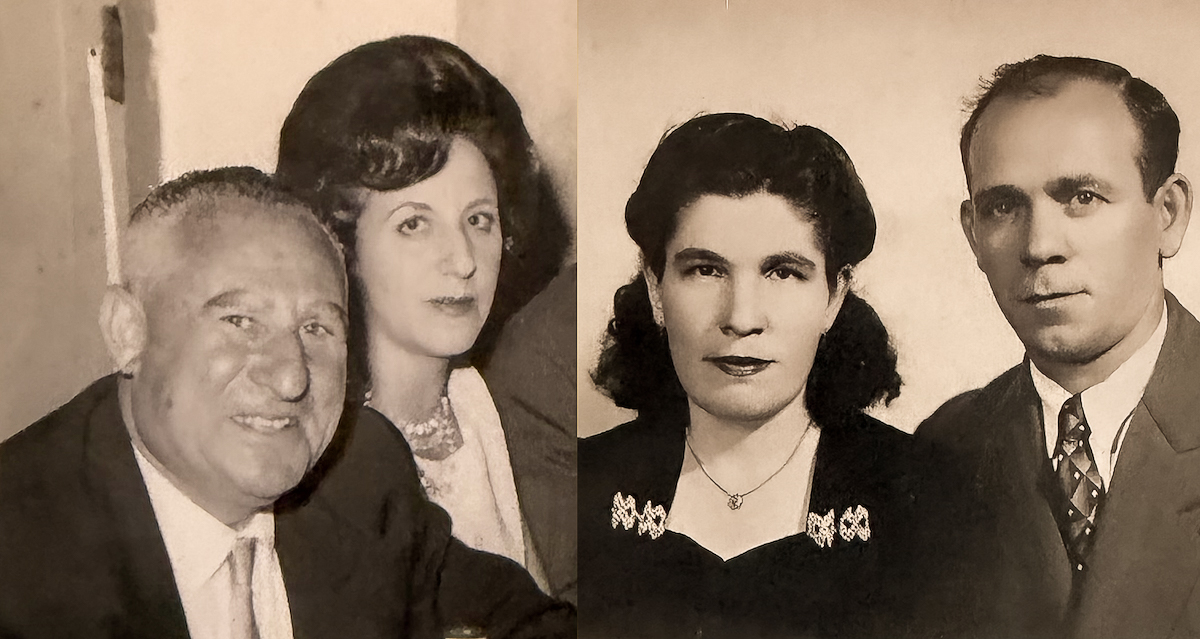
Este ensayo también está disponible en español.
In my cushy 2026 tech bubble in San Francisco, risk-taking is a personality trait. The failure case, for most in my circles, is going back to a six-figure salary. My grandparents would not have recognized this as risk at all. Abraham was a pioneer who, along with his wife, Sarah Rivka, anchored the community I grew up in. Betty, just a teenager, became the provider for her whole family. David was forced to rebuild his life three times.
Taking a leap can be easier when you have less to lose. If the floor is already falling out from under you, the risky option is the safe bet. My grandparents did not take the kinds of risks people romanticize in San Francisco. Theirs was not a pursuit of self-actualization or a career goal, but life punching them in the face. No failing fast, and no learning in public.
They had to go, and had to keep going.
My grandpa Abraham came from Żelechów, a small town halfway between Warsaw and Lublin, to Costa Rica in 1930 with a few friends. Young and alone, they didn’t speak the language, and had no idea what would come next. They became door to door salesmen. Their little pod became a lighthouse to other Polish Jews escaping poverty and antisemitism. He saved enough money for a boat ticket for his childhood sweetheart, so my grandma, Sarah Rivka, had her own adventure sailing across the Atlantic to meet him. Together with their friends, they built a community. As more people arrived, they had a place to land where they would not have to explain themselves from scratch. I grew up downstream of that work.
My grandpa David came from a town along that same road, Puławy. He left behind his religious upbringing for urban life, and threw himself into books. He learned and taught literature with the communists. He married a woman from Warsaw, and they had a kid together. Before WWII started, they planned for a better life, and he left first, to South America. When he arrived in Bolivia, he learned that back in Poland his wife had been murdered. His kid went missing, and was never found. And yet, life continued. He made his way to Cochabamba, and started a business, importing rugs.
Around the same time, my grandma Betty, still a teenager, arrived in La Paz with her parents and little sisters, refugees from Berlin escaping the beginning of the Holocaust. Friendly neighbors knocked on their door to warn them: their name was on next week’s list. On arrival, at the train station, she heard an announcement: a job opening for a fluent French speaker. She didn’t know Spanish yet, but took the job on the spot to feed and house her family.
They found each other. He built a second family in his 50s. Reaching his 70s, political unrest in Bolivia sent them searching again. He moved with my grandma, his two teenage kids, and his elderly father-in-law to Costa Rica. Not to retire, but to continue working. He started another business, this time selling appliances.
Their resilience is sobering. It makes the word “risk” feel small as it comes out of my mouth.
When I think about what I want next, I feel both ambitious and impatient. I am itching to start something because I want the challenge of doing something impactful, not because my family needs it to survive. I can only afford that distinction because of them.
I think about Zaidi Abraham and Buba Sarah building a lighthouse out of friendship and grit.
I think about Abo David and Tati Betty rebuilding from a kind of loss that can’t be put on paper.
A decade into my journey in San Francisco, I have started to feel a bit like a lighthouse myself, opening doors for friends. My reinventions are not as dramatic, but I am taking a page from them. If they could see where I am, they would be elated.
Got to keep going.
Thanks to Hannah Doherty and Frida Tarcica for their comments on early drafts of this essay.
Photo: My grandparents, courtesy of La Fridita who scanned them especially for this essay.